There are a million lists online telling you the “10 Questions You Need to Ask Your Wedding DJ.” I'll be honest. Most of them are pretty dumb.
“Are you insured?” “What kind of music do you play?” “Have you worked at my venue before?” Some of those questions have value. Some don't tell you much of anything. And checking ten boxes off a list isn't going to tell you whether the person sitting across from you is actually the right DJ for your wedding.
I think there's a better way to approach the conversation. Treat it like a job interview.
Because that's essentially what it is. You're hiring someone to work for you for one night. Depending on the wedding, they might be with you for 10 or 12 hours. They're going to work alongside your venue, caterer, photographer, videographer and other vendors. They're going to be responsible for some of the biggest moments of the night.
And just like any other job interview, you're trying to figure out a few things. Do they have the experience? Do they have the skills? Can they solve problems? Can they work with the rest of the team? And maybe most importantly: Do they fit your culture?
Not every wedding DJ is the same
I actually avoided DJing weddings for a long time. When I was younger, wedding DJs had a certain reputation. They were the guys getting out on the dance floor doing the Chicken Dance with your aunt. They were playing games. They were very involved in everything happening.
That wasn't me. I came from a different world. I mixed. I scratched. I was comfortable creating more of a club atmosphere. I could MC, make announcements, do introductions and handle all of the traditional responsibilities of a wedding DJ. But once dancing started? I wanted to let the music do the talking.
Over the last 10 or 15 years, weddings changed. Couples started looking for DJs with that kind of skill set, and suddenly what I did made a lot more sense in the wedding world. But that doesn't mean my style is right for everybody.
If you want a DJ who's going to get on the dance floor and do the Cupid Shuffle with your family, that's awesome. I'm not your guy.
I play the music. I don't dance to it.
There are plenty of great DJs who are much more interactive than I am. There are DJs who love games. There are DJs who are incredible on the microphone. There are DJs who can help pull a more reserved family into the party because that's one of their strengths.
That's why one of the most important parts of your DJ job interview is figuring out whether that person's style matches the wedding you're imagining. Not every DJ is right for every couple. And not every couple is right for every DJ. That's okay.
Don't just ask what they've done. Ask what they can do with your ideas.
Experience matters. If you're spending a significant amount of money on a DJ, I think it's reasonable to expect a certain amount of experience to come with it. But I wouldn't stop at, “How many weddings have you done?”
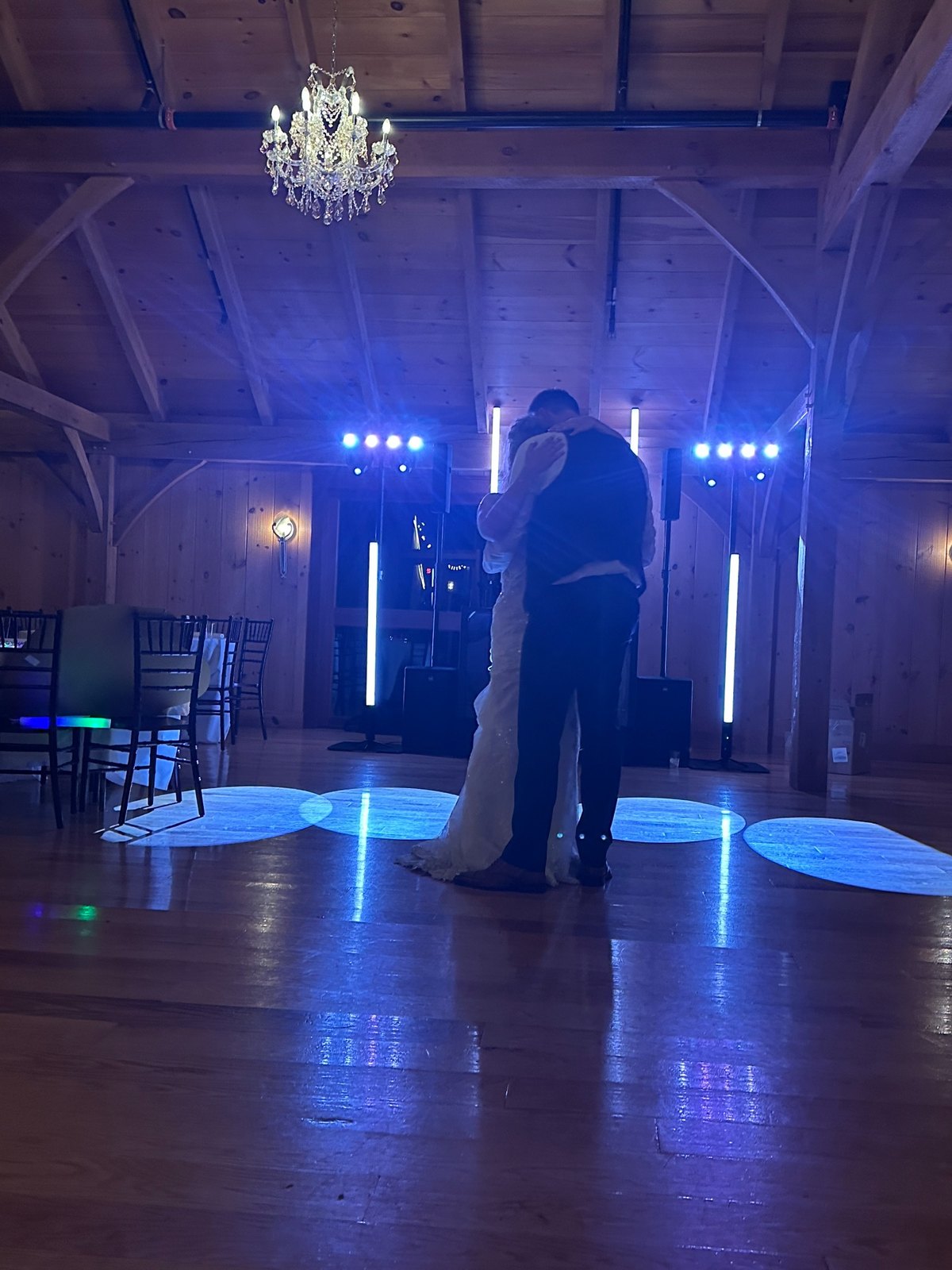
Tell them something you actually want to do. Maybe you saw a father-daughter dance on TikTok. It starts as a traditional slow dance, the song suddenly winds down like something went wrong, everybody looks at the DJ, and then another song hits and the bride and her dad break into a choreographed dance.
You don't necessarily need a DJ who's done that exact thing. There's a first time for everything. But I'd want to hear something like: “I've done something similar. Here's how I'd put it together.” Then I'd want them to start helping me flesh out the idea.
That's where experience becomes valuable. When you're paying someone who's been doing this for years, you shouldn't have to walk into every unusual idea wondering whether your wedding is the first time they're trying to figure out how any of this works.
A good DJ can take the shred of an idea you have and help turn it into an actual moment. And I think there's another difference experience can make. When you bring an unusual idea to some people, they see a hurdle. The right person sees an opportunity. They start thinking about how to make it work and how to turn it into something your guests will remember. That's somebody I want on my team.
You're hiring somebody to work with your other vendors, too
This is one I don't think couples talk about enough. Your DJ isn't working alone. They're working with your caterer. Your photographer. Your videographer. Your planner. Your venue coordinator. And communication between those people matters.
Maybe we're running 20 minutes behind and dinner is ready. I need to know that, but more importantly, catering needs to know what we're doing so 150 plates of food aren't sitting around getting cold while everybody waits for something else to happen.
Maybe we're running early. Great. Is the kitchen ready? Can we move something? Or do we need to slow things down? Your videographer may need clean audio from the ceremony and the toasts. Is your DJ prepared to work with them to make that happen?
These aren't things your guests will ever think about. They shouldn't. That's the point. When the vendor team works well together, the wedding just seems to happen.
Ask your DJ what happens when something goes wrong
It would be great if every wedding went exactly according to plan. They don't.
Problem solving happens twice in this business. Sometimes it happens during planning. You have an idea but aren't sure how to execute it. That's when experience gives you time to come up with a solution. The other kind happens on the wedding day. And now you don't have two weeks to figure it out.
Years ago, I was DJing a wedding when the photographer received a text message from her boyfriend during dinner. He broke up with her. I'm not making this up. They'd been together for about a year. She wasn't expecting it, and understandably, she was a wreck.
There was just one problem. We still had a wedding happening.
We had to cut the cake. We had things that needed to happen. The bride and groom were depending on all of us. So for a few minutes, DJ Puff also became a therapist.
I basically told her, This sucks. I'm sorry this is happening to you. You're going to have to deal with this when you get home. But there are two people out there depending on you right now, and it's time to step up and be a professional.
And to her credit, she did. She pulled herself together, went back out there and finished the wedding. I've worked with her several times since, and she actually thanked me for that conversation afterward.
Does your wedding DJ need a specific plan for what happens if your photographer gets dumped during dinner? Of course not. But they should be someone who can handle the unexpected.
Technical things happen. Timelines change. Vendors run late. Personal things happen. Weather happens. Something eventually doesn't go according to plan. The wedding still has to move forward.
Every wedding is our Super Bowl. We get one shot.
Stop asking your DJ what kind of music they play
This is one of those questions you'll find on almost every wedding DJ checklist. “What kind of music do you play?” My answer? Your music.
I've done country weddings. I've done EDM weddings. I did a dubstep wedding in the Poconos. I've done Latin weddings. Earlier this year, I did a West African wedding for a family from Sierra Leone.
The question isn't what I like to play. It's what makes sense for your wedding.
Obviously, we're going to talk about music. You're going to give me songs. Maybe you send me a Spotify playlist or an Apple Music playlist. We'll talk about what you love and what you absolutely don't want to hear. But I don't think asking a professional wedding DJ what “kind” of music they play tells you very much.
A better conversation is about whether they understand what you want the night to feel like.
Some of the standard questions aren't as important as you think
Take insurance. Should your DJ be insured? Absolutely. But at this point, virtually every legitimate DJ company working regularly in established wedding venues is going to carry insurance because many of those venues require it.
So when a DJ company makes “WE'RE INSURED!” one of its major selling points? Great. Good for you. You should be. That's not what would make me hire you.
Then there's: “Have you worked at my venue before?”
I actually think that's a perfectly reasonable question. But I wouldn't use the answer as an automatic disqualifier. Every year I work at venues I've never worked at before. There's a first time for every venue.
If your DJ hasn't worked there, ask what they're going to do about it. How will they familiarize themselves with the space? Are there load-in considerations? Where is the ceremony happening? What does the room look like? Are there sound restrictions?
How somebody prepares for something unfamiliar tells you more than whether it's unfamiliar.
Pay attention to the questions your DJ asks YOU
A good job interview goes both ways. You should absolutely be asking your potential DJ questions. But pay attention to what they're asking you.
And I'm not talking about: “So...what kind of music do you guys like?” We'll get there.
I want to know what you want to get out of your wedding. Do you have a guest list that's going to show up ready to party? Or is this a group we're going to have to work a little harder to get onto the dance floor?
Are there family members and friends coming who haven't seen each other in years? Sometimes that's one of the most important things happening at a wedding. People who rarely get the opportunity to be together are finally all in the same room.
Maybe your definition of a successful wedding isn't four straight hours of a packed dance floor. That's important for me to know.
I want to know if there's something you've seen at another wedding that you loved. I also want to know if there's something you've seen at another wedding that made you think: Please, for the love of God, do not do that at ours.
A DJ should be trying to understand what a successful wedding looks like to you. That's a much more important question than what decade of music you like.
Don't hire somebody who just tells you what you want to hear
Remember something during this interview: The DJ wants the job. They're putting their best foot forward. And some people are really good at telling potential clients exactly what they think they want to hear.
That's why I actually think it's a good sign when an experienced DJ occasionally pushes back. Maybe you explain an idea and they say: “We can absolutely do that, but here's something you might want to think about.”
Good.
You aren't hiring someone with hundreds of weddings worth of experience just so they can nod their head for an hour and say yes to everything. You're hiring their experience, too.
They should listen to your vision. They should respect that it's your wedding. But if they see a potential problem, they should tell you.
Read reviews differently
If you've narrowed your search down to two or three DJs, this is when I'd start doing a little homework. Don't just count reviews. Read them.
If the DJ works for a larger company, search the company's reviews for that DJ's name. Then look for the things that matter to you.
Do couples repeatedly say they kept everyone dancing? Do people mention how organized they were? Do reviews say they helped with planning? Were they funny on the microphone? Interactive? Did they read the room? Did everything feel seamless?
If a DJ tells you during your interview that reading the room is one of their strengths and then you find multiple reviews from completely different couples saying, “They read the room perfectly,” that's meaningful.
The number of reviews isn't everything. Someone might be incredible at this and terrible at remembering to ask couples for reviews afterward. Look for evidence of the things that matter to you.
Social media can help too. Watch them actually work. Does what you're seeing match the person you just talked to? You're not trying to conduct a criminal background investigation here. You're just making sure the interview matches the résumé.
What about price?
Weddings are expensive. There's really no way around it. The venue costs money. Food costs money. Tables and chairs cost money. Decor costs money. Photography costs money. And yes, entertainment can cost a lot of money.
But higher doesn't automatically mean better. And lower doesn't automatically mean worse.
Maybe you interview a DJ who costs $1,000 and another who costs $3,000. The question isn't simply: “Why is this DJ $2,000 more?” The question is whether you're getting $2,000 more value.
What does their experience give you? What does their preparation give you? What does their ability to solve problems give you? Most importantly: What does their ability to give you peace of mind give you?
There are talented DJs starting out who aren't charging premium prices yet. There are expensive DJs who have been doing weddings forever and have gotten way too comfortable. That's actually something I'd watch for.
If I'm paying premium money for someone with hundreds of weddings behind them, I want all of that experience. But I also want them to treat my wedding with the same care they gave their first ten weddings.
Remember when you were nervous? Remember when you over-prepared? Remember when you couldn't wait to get there because you were excited somebody trusted you with their wedding? Keep that. Now add 10 or 15 years of experience to it. That's the best of both worlds.
Your DJ may have done 500 weddings. You've only got one. Make sure they understand the difference.
The final question isn't one you ask the DJ
Eventually the interview ends. You've talked about experience. You've talked about your vision. You've figured out their style. You've asked how they handle problems. You've looked at reviews. You know the price.
Now there's really only one person left to interview. Yourself.
How did you feel when the conversation ended? Did they understand you? Were they easy to talk to? Did they understand your vision while still bringing their own ideas to the conversation? Did they give you advice instead of simply agreeing with everything you said? Did you trust them?
And here's the test I came up with that I think might be the simplest way to put it:
If this person wasn't working your wedding, would you want to invite them as a guest?
If you spend 45 minutes or an hour talking with a DJ and leave thinking, Man, I feel like I've known this person for years, that's worth paying attention to.
Do your research. Ask good questions. Look at the experience. Check the reviews. Understand what you're paying for. But don't completely overthink it either.
Sometimes everything just clicks. And when it does, trust your gut.
You're hiring your DJ for one night. Make sure it's someone you trust with the shift you only get once.