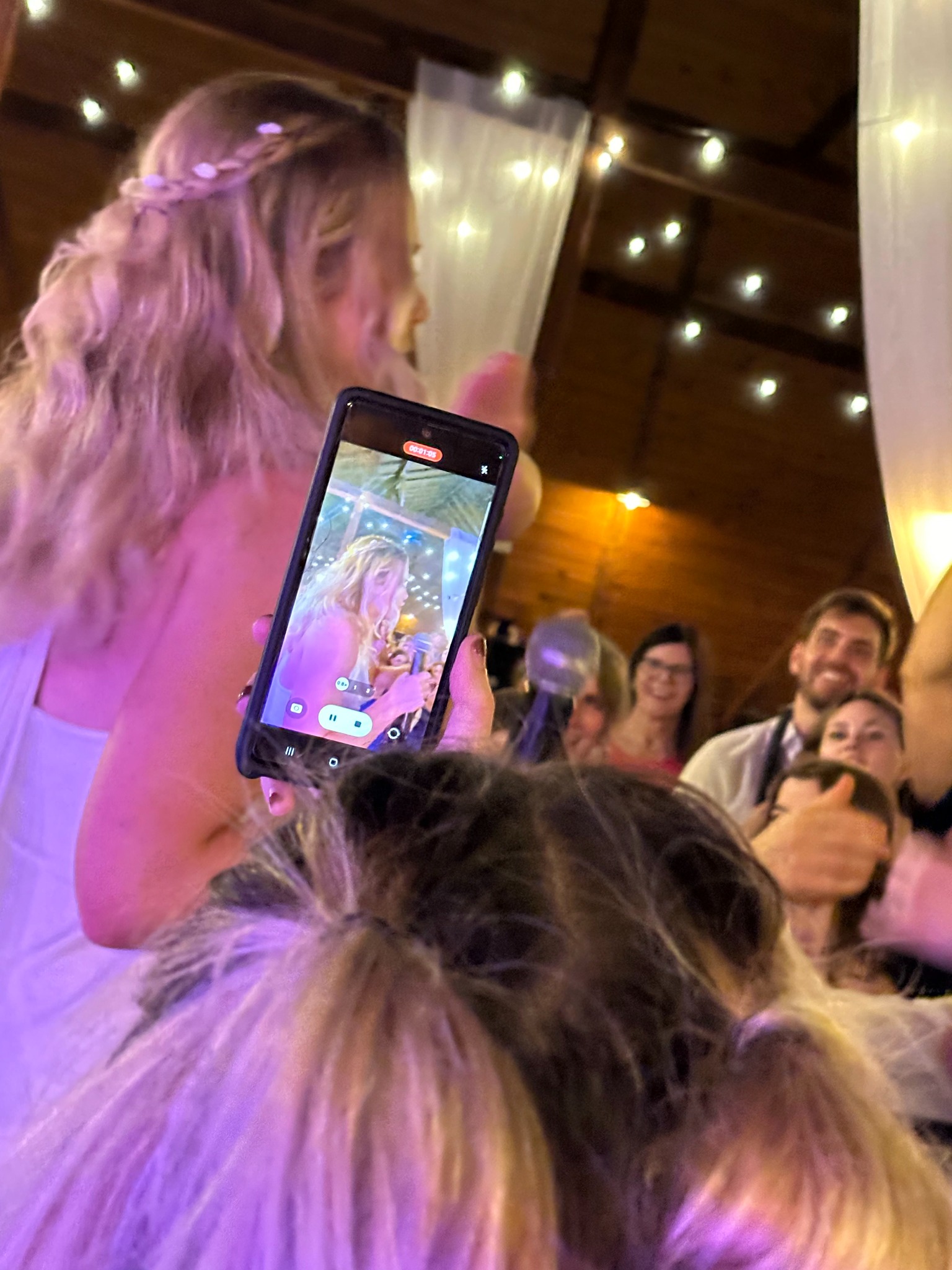
When you're looking for a wedding DJ, it's pretty easy to focus on the obvious stuff.
What kind of music do they play? Can they mix? Are they good on the microphone? Can they keep a dance floor going?
Those things matter. Obviously.
But after doing weddings for a long time, I've learned that some of the skills that separate a really good wedding DJ from an okay one have absolutely nothing to do with DJing.
A wedding DJ is involved in a lot more of your day than most people realize. We're part of the planning process. We're communicating with your other vendors. We're helping move the timeline along. We're dealing with guests, solving little problems and making adjustments throughout the night.
And a lot of the time, the couple never even realizes we're doing it.
So when you're trying to figure out what to look for in a wedding DJ, here are a few things I think deserve just as much attention as what's on their playlist.
A Good Wedding DJ Isn't a Yes Man
One of the first skills to look for in a wedding DJ shows up long before the wedding day. It happens during the planning process.
Obviously, your DJ should listen to your ideas. It's your wedding. But there's a difference between listening to you and simply agreeing with everything you say.
A good wedding DJ isn't afraid to push back a little.
I've been part of enough weddings to know that sometimes an idea sounds great when you're talking about it six months before the wedding, but there may be something about the way it will actually play out that you haven't considered.
That doesn't mean I'm going to tell you, “No, we're not doing that.” It means I'm going to explain what I've seen, why I have a concern, and maybe offer another way to accomplish what you're trying to do.
That's part of what you're paying for.
You're not just hiring someone who knows how to mix songs. You're hiring someone who has been through this process before and can use that experience to help guide you through it.
And you can sometimes spot this before you even book your DJ.
During your initial conversation, pay attention to whether they're only talking about music, dancing and equipment, or whether they're asking questions about your wedding as a whole. Do they offer ideas? Do they point out things you may not have considered? Are they willing to have an actual conversation instead of just telling you everything you want to hear?
This is one of the reasons I think you should treat your wedding DJ interview like a job interview. You're trying to learn how this person thinks, not just what speakers they own or what songs they play.
The best DJs will take your vision seriously. They just won't be afraid to use their experience when they think there's a better way to make that vision work.
Your DJ Has to Communicate With Almost Everyone
Your wedding isn't made successful by one, two or three people. There's an entire team involved in making the day work.
And your DJ is in a unique position because, outside of your wedding coordinator, there may not be another vendor who interacts with as many different parts of that team throughout the day.
We're constantly communicating with photographers and videographers. We're talking with catering staff. We're checking in with the coordinator and venue staff. Obviously, we're communicating with the couple. We're talking to members of the wedding party, especially when there's a surprise planned or something unique happening later in the day.
And it goes beyond the vendors.
We're communicating with your guests. We're talking to your friends and family.
Most of those conversations are easy. Every once in a while, they're not.
Sometimes it's telling an aunt or uncle that I'm probably not going to play the song they're requesting. Sometimes it's dealing with Cousin Bobby, who's had a little too much to drink and has decided he needs a microphone.
Communication is a huge part of being a wedding DJ.
Think about something as simple as getting ready for the first dance. Before I ever announce it, I need to know that the photographer is ready. The videographer needs to be ready. The couple needs to be ready. If something is happening immediately afterward, those people may need to be in place too.
Simply looking at the timeline, seeing that it says “First Dance – 7:15” and grabbing the microphone isn't enough.
A good wedding DJ needs to be comfortable taking the lead when necessary, while also understanding when someone else is leading. They need to be able to communicate with a room full of guests without sounding bossy, work alongside other professionals without stepping on their toes, and occasionally have a difficult conversation without turning it into a bigger situation than it needs to be.
The success of a pretty significant portion of your wedding day can depend on your DJ's ability to communicate — not just their ability to DJ.
Reading the Room Isn't Just About the Dance Floor
You'll hear DJs talk about their ability to “read the room” all the time.
Usually, they're talking about dancing — knowing when a song isn't working, figuring out what direction to take the music, or recognizing when it's time to change things up.
But reading the room starts long before the dance floor opens.
One of the trickiest parts of a wedding reception can actually be the end of dinner.
Half the room might be finished eating. The other half is still working on dinner. The couple is walking around visiting tables. And eventually you can start to feel it: people are ready for whatever comes next.
That's where timing becomes important.
Maybe the timeline says the next event is supposed to happen at 7:30, but it's 7:10 and the room is starting to get antsy. A good DJ shouldn't necessarily stare at the clock and wait another 20 minutes simply because that's what was written down months ago.
Sometimes you have to call an audible.
That doesn't mean the DJ gets to unilaterally change the timeline. It means recognizing what's happening in the room and communicating with everyone involved.
I'll talk to the photographer, videographer, coordinator or whoever else needs to be ready and say, “Hey, I know we weren't planning on doing this yet, but I think the room is ready. Can we move it up?”
And most importantly, I'll talk to the couple.
“I think your room is ready for the next thing. Are you guys ready to go?”
They're ultimately the ones who make that decision. My job is to recognize what's happening and give them the option.
That sense of timing is one of those wedding DJ skills that's really difficult to teach. It comes from being at a lot of weddings and seeing what happens when the timing is right — and, maybe more importantly, seeing what happens when it isn't.
I've watched that period at the end of dinner get awkward. When guests are clearly ready to move on and nothing is happening, the energy in the room can start disappearing pretty quickly.
A timeline is a plan, not a stopwatch.
A good wedding DJ knows the difference.
Good Wedding DJs Solve Problems Before You Know There's a Problem
Weddings don't always go exactly according to plan.
Actually, they almost never do.
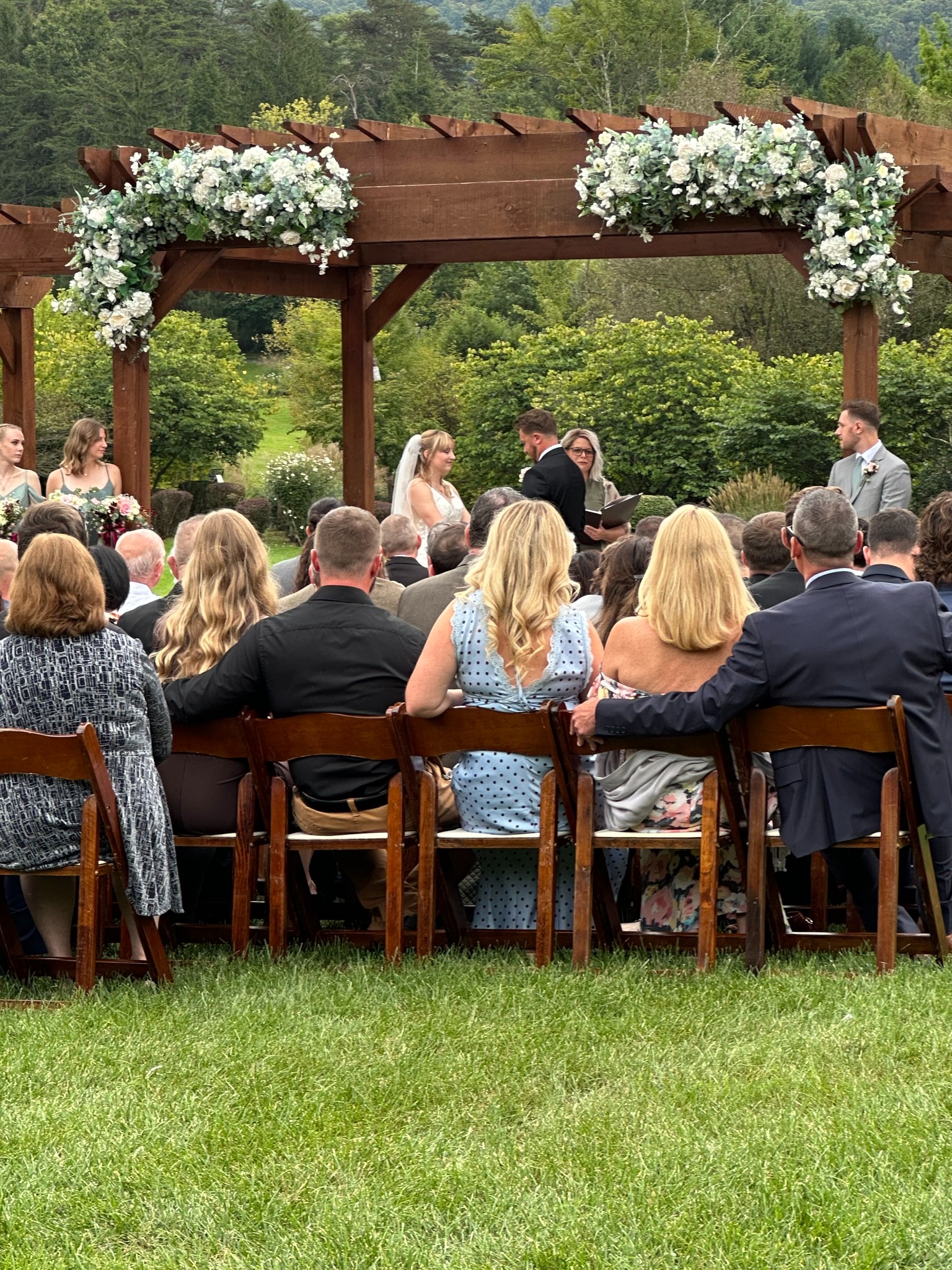
Sometimes it's something big. Imagine you're getting ready to start an outdoor ceremony and suddenly it starts raining.
You can panic, or you can start working the problem.
Is the ceremony moving? What equipment needs to get out of the rain? What needs to move into the new ceremony space? Who needs to know what's happening?
And if everybody is scrambling to move chairs, I'm not going to stand there and say, “That's not my job.”
I'll grab some chairs.
But most of the things that happen at weddings aren't nearly that dramatic. They're tiny.
Maybe the bride's dress is taking longer to bustle than expected. That's okay. The entrance music plays a little longer.
Maybe the couple finally sits down for the first time all night and I notice nobody has brought them a drink yet. I'll grab one.
There's a venue I work at where they regularly put my ceremony table directly behind the aisle where the bride will be walking.
Technically, I could leave it there. That's where they put me.
But then I'm going to be standing behind her in the photographer's shot as she walks down the aisle.
So I move it.
The same goes for speakers and other equipment. Our gear might look great to us DJs, but let's be serious: it's still a bunch of big black stuff sitting in the middle of a beautifully decorated wedding.
Nobody wants a giant speaker photobombing one of the most important pictures of their life.
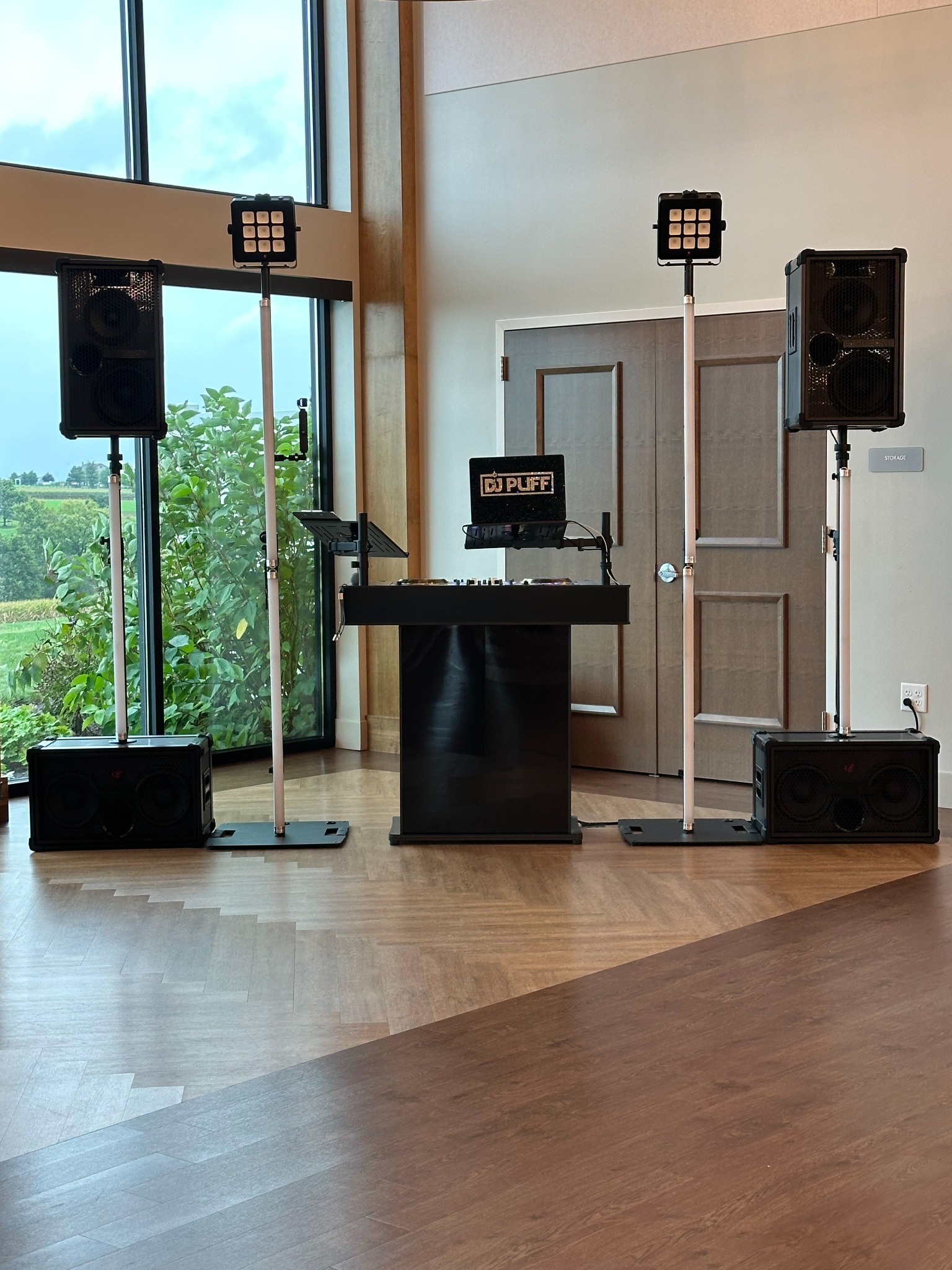
Part of doing this job well is understanding where you belong and, sometimes more importantly, where you don't.
None of these things individually sounds like a huge deal.
That's exactly the point.
There are hundreds of little decisions being made throughout a wedding day. Some involve solving an actual problem. Others are simply noticing something before it becomes a problem.
And a lot of them have absolutely nothing to do with music.
You develop that awareness by doing a lot of weddings. Eventually, you stop seeing only what's happening at your DJ table and start seeing the entire wedding happening around you.
You're Hiring a Wedding Professional Who Also Happens to DJ
None of this is meant to minimize the actual DJ part of the job.
I love that part.
Music matters. Mixing matters. Reading a dance floor matters. Knowing when to get on the microphone — and when to get off of it — matters.
But those are the obvious things.
When you're interviewing wedding DJs, pay attention to the things that aren't as obvious.
Listen to how they talk about planning. Ask how they work with photographers, videographers and coordinators. See whether they're willing to give you an opinion instead of simply agreeing with everything you say. Listen for the little stories that show they've dealt with weddings that didn't go perfectly according to plan.
Because you're not hiring someone for four hours of dancing.
You're hiring someone to be part of your wedding day.
And some of the most important things they'll do for you might have absolutely nothing to do with pressing play.